

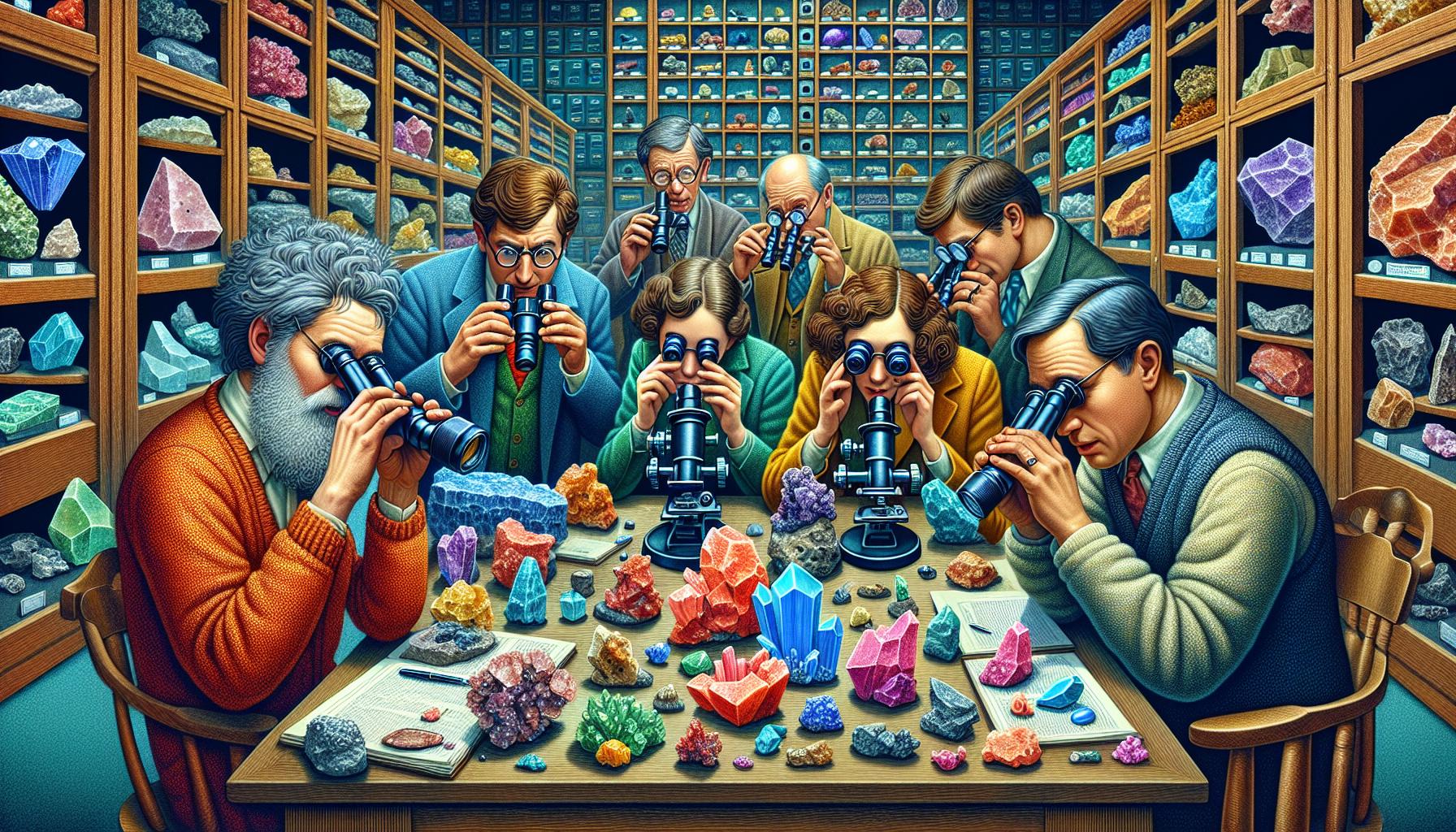
Are you a rock enthusiast who’s ever stumbled upon a shiny gem, only to misidentify it in front of fellow rockhounds?
We’ve all been there—whether it’s mistaking a common quartz crystal for a rare gemstone or confusing pyrite for gold, these moments are both humbling and hilarious. But why do these misidentifications happen, and what can we learn from them?
Well, we’ll be going over:
- What are the most common challenges that lead to mineral misidentifications?
- How can you avoid these mix-ups in your own rockhounding adventures?
- Why is it important to embrace and learn from these mistakes?
Let’s dive in and share a laugh over the blunders that make us better rockhounds!
As a rockhound, misidentifications are part of the journey. Mistaking quartz for calcite or pyrite for gold is a rite of passage that helps sharpen your skills. Embrace these learning moments, knowing that even experienced collectors have made similar mistakes. Each error is an opportunity to improve your knowledge and refine your techniques. Keep exploring, and remember that every misidentification brings you closer to becoming a skilled and confident rockhound. Happy hunting!
Common Challenges in Mineral Identification
When identifying minerals, you face several obstacles that can lead to misidentifications. Here are some of the common challenges you may encounter:
Lack of Proper Tools
Without the right tools, accurately identifying minerals can be tricky. Rockhounds often find themselves without essential equipment like a stereo microscope that aids in distinguishing between minerals. To overcome this challenge, consider using a hand lens or a jeweler’s loupe for closer examination, enhancing your ability to differentiate between similar-looking specimens.
Misleading Physical Properties
Minerals can possess deceptive physical properties, complicating the identification process. Similar colors, textures, and crystal structures among minerals can lead to confusion, especially if you rely solely on visual inspection. To avoid misidentifications, it’s crucial to consider other properties such as hardness, density, or chemical composition, providing a more comprehensive assessment for accurate mineral identification.
Similar Appearing Minerals
Certain minerals appear strikingly similar, further adding to the complexity of mineral identification. This resemblance can pose a challenge, requiring a keen eye and thorough examination to differentiate between them accurately. Understanding the subtle differences in properties and conducting detailed analyses are essential to avoid mistaking one mineral for another.
Personal Anecdotes of Misidentifications

Quartz vs. Calcite Mix-Up
Mixing up quartz with calcite is a common error among rockhounds. Quartz, known for its hardness and various colors, can easily be mistaken for calcite, a softer mineral often found in sedimentary rocks. You might encounter a scenario where you misidentify a piece of calcite as quartz due to their similar appearances.
Make sure to pay attention to distinguishing features like hardness and mineral composition to avoid these misidentifications in your own collecting adventures.
Learning from Mistakes

Conclusion
As a rockhound, embracing misidentifications is all part of the thrilling journey through the world of minerals. Learning from these errors not only adds to your experience but also sharpens your skills in distinguishing between different specimens.
Remember, even seasoned collectors can stumble upon misidentifications, so don’t be too hard on yourself. Keep exploring, keep observing, and keep refining your identification techniques.
Each mistake is a stepping stone towards becoming a more knowledgeable rockhound. So, next time you come across a mineral that puzzles you, embrace the challenge, grab your tools, and dive into the exciting process of unraveling its true identity. Happy hunting, fellow rock enthusiast!